Learning violin has a reputation for being incredibly difficult.
After teaching violin for more than 25 years, I look at it a little differently.
I don’t think violin has to be incredibly difficult to learn. I think violin becomes incredibly difficult when you learn it incorrectly.
I’ve watched complete beginners develop good intonation and a surprisingly clean sound within their first six months. I’ve also worked with students who had played for five or even ten years but struggled with relatively simple music because bad habits were holding them back.
That’s why this violin for beginners series starts with fundamentals instead of rushing straight into songs.
I absolutely want you to play songs. I want you enjoying the violin and eventually playing whatever music made you pick up the instrument in the first place.
But first, let’s build a foundation that makes everything you want to do later easier.
💡 What You'll Learn in This Article
- Why good fundamentals can make learning violin much easier
- The bad habits I most often see holding violinists back
- How to tune and position your violin before you begin playing
- Why fingerboard stickers can actually help develop intonation
- How your left-hand position affects everything you'll play later
- What you should focus on during your first few months of violin
The Biggest Mistake I See Violin Beginners Make
When a new student starts with me, I’m not worried about how quickly we can get through songs.
I’m watching how they’re doing everything.
Is the left hand too low? Are they squeezing? Are their fingers pressing much harder than necessary? Is there tension developing before we’ve even had a chance to establish the correct movement?
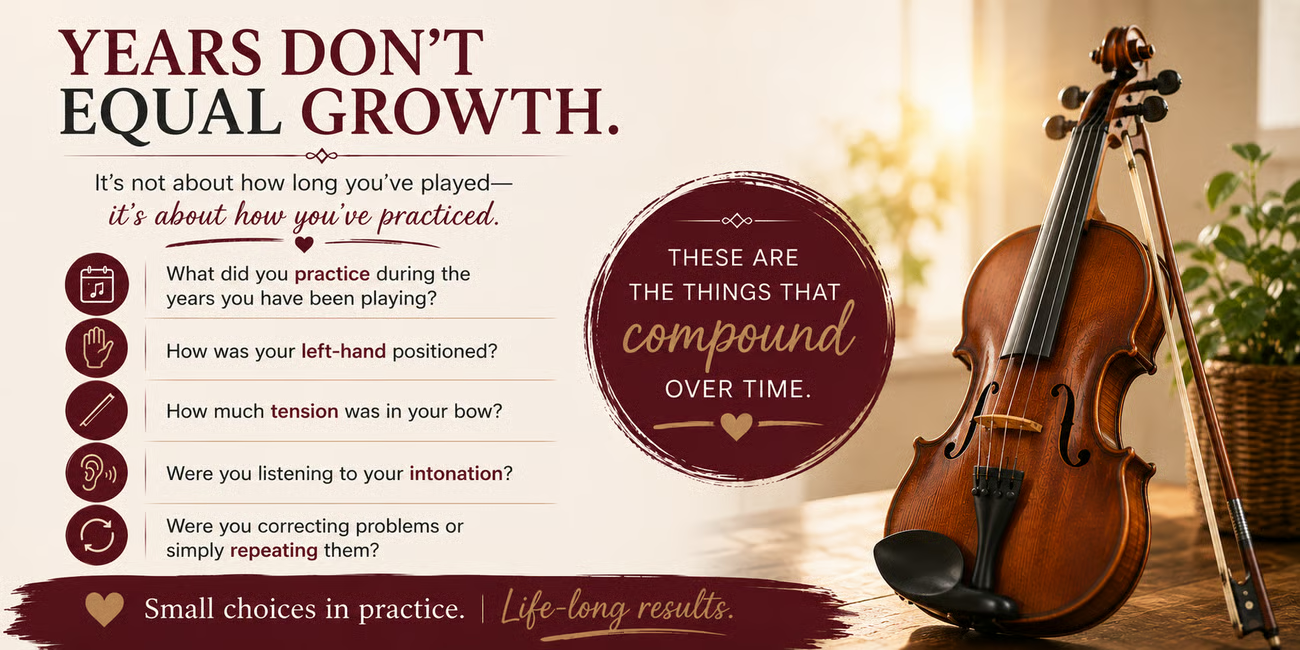
Violin is an instrument where small technical problems can compound.
You may not notice the consequences during your first few weeks. You might even be able to play a few simple songs while doing something incorrectly.
The problem shows up later.
Suddenly your fourth finger is difficult to reach. You can’t play as quickly as you’d like. Your intonation is inconsistent. Your bow bounces or scratches. You practice more, but progress feels frustratingly slow.
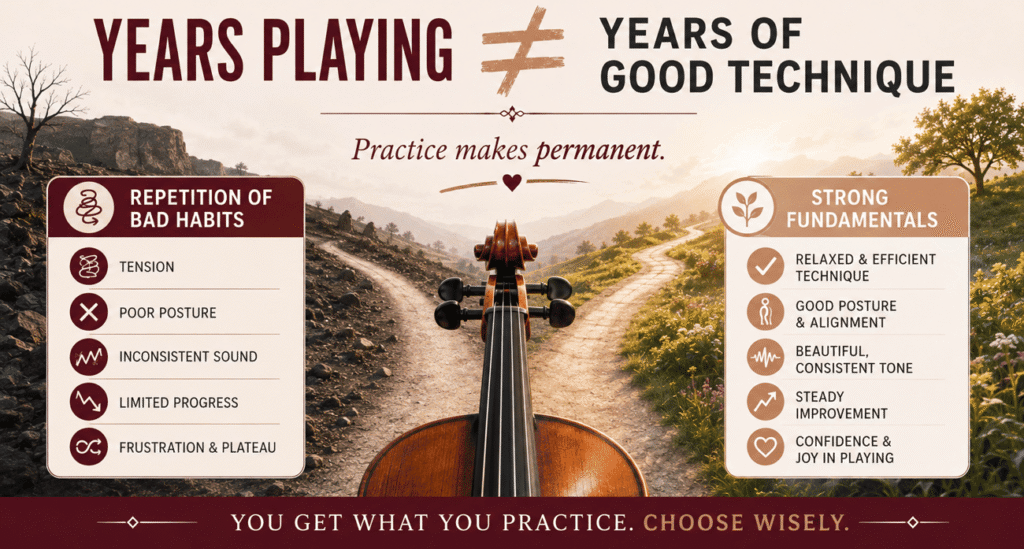
More practice doesn’t automatically fix poor technique. Sometimes it reinforces it.
Step 1 - Understand Why Fundamentals Matter So Much on Violin
In lesson 1 of my beginner course, I demonstrate several of the problems I see repeatedly in private lessons.
They include tension in the bow hand, what I call a “banana thumb,” a stiff wrist, improper elbow movement, inefficient bow usage, and a left hand that sits too low.
Watch Lesson 1: Pay particular attention to the bow thumb, wrist, elbow, and left-hand examples. You don't need to master these yet—the goal is to start recognizing what good technique looks like.
Bad habits are the biggest barrier to a student's growth. When I teach someone correctly from scratch, I've seen them sound remarkably good within six months—even while playing simple music. When a student has repeated inefficient movements for years, correcting those same fundamentals can feel almost like learning the instrument again.
One student who really stands out to me was Sam.
Sam had taught himself violin for about ten years. He clearly wanted to play, but technique hadn’t been a major focus during those years.
His left hand sat extremely low and his bow hold was very tight.
Even beginner-level music was difficult for him to play with the quality he wanted.
Correcting the left-hand position after ten years was especially challenging because his body had become accustomed to the old position. Asking him to raise the hand almost felt like asking him to learn a different instrument.
At the same time, I’ve had students who learned violin with me from scratch and within a year were playing music two or three levels beyond where Sam was.
It wasn’t because they possessed some magical talent Sam didn’t have.
Their technique wasn’t fighting against them.
Is Violin Really That Hard to Learn?
People often describe violin as one of the hardest instruments to learn.
There is truth behind that reputation. A violin doesn’t have frets telling you exactly where to place your fingers, and producing sound with a bow adds another physical skill that has to coordinate with the left hand.
But I’ve developed a different perspective after teaching so many students.
Violin has an incredible ability to accumulate bad habits. Avoid those habits, and the instrument becomes much easier to play and progress.
That’s why I don’t want a violin for beginners course to simply show you which notes make a song.
I want to focus on fundamentals.
I want you to understand why we’re learning certain fundamentals in a certain way.
Most importantly, I want you to start developing enough awareness that eventually you can identify bad habits yourself.
Step 2: Tune Your Violin Before You Play
Before learning your first notes, let’s make sure the instrument itself is ready.
A standard violin has four strings:
E – A – D – G
If the open strings aren’t tuned properly, every note you try to learn from them begins from the wrong reference point.
That’s particularly important for beginners because you’re not only training your fingers. You’re training your ear.
Watch Lesson 2: Tune your violin along with me before moving to the next section.
Recommended Violin Tuners for Beginners
A good violin tuner can be incredibly helpful when you’re first learning—not only for tuning your open strings, but also for developing better intonation as you practice.
For a simple violin tuning app, I recommend insTuner Free. I’ve recommended this app for years (it was previously called INSTuner Light), and it gives beginners an easy way to see whether a note is sharp, flat, or in tune.
I also recommend the ENO MUSIC Professional Violin Tuner. This is a clip-on violin tuner that attaches directly to your instrument and detects pitch through the violin’s vibrations.
That’s one reason I especially like it for beginners.
Because the tuner sits directly on your violin and the display is easy to see, you can leave it attached while practicing.
This allows you to check more than just your G, D, A, and E open strings—you can also use it as a visual reference while practicing scales, exercises, and pieces.
If a note is slightly sharp or flat, you can see it immediately and adjust your finger placement. This can be a really useful way to start connecting what you see, feel, and hear as your intonation develops.
Just don’t become dependent on watching the tuner for every note.
The long-term goal is to develop your ear so you can recognize when you’re out of tune yourself. Think of the tuner as feedback while you’re building that skill.
Should a Beginner Use a Violin Tuner?
Yes.
I don’t expect someone who has just started violin to instantly recognize perfect intonation by ear. A tuner gives you objective feedback while your listening skills develop.
Over time, I want you to become less dependent on visual tools and increasingly capable of hearing whether something sounds sharp or flat.
But using a tool while you’re developing that awareness isn’t cheating.
The tool helps train the skill that eventually allows you to need the tool less.
Before you practice, check all four open strings with a tuner. Don't treat tuning as an annoying step before the "real" practice begins. Listen carefully while you tune and start learning what G, D, A, and E sound like when they're correct.
Step 3: Learn Proper Violin Posture
Posture is one of those topics beginners can be tempted to rush through.
Don’t.
How you position the violin affects what your left hand will eventually be capable of doing.
Watch Lesson 3: Notice how the violin is positioned and supported before focusing on what the fingers are doing.
I want the instrument supported comfortably so the left hand doesn’t feel responsible for desperately holding the violin in place. We’re eventually going to ask that hand to move quickly, reach different notes, stretch, and stay relaxed while doing it.
If we’re creating unnecessary tension before we’ve even played a note, we’re making all of those future skills harder.
My Recommended Violin Shoulder Rest
A good violin shoulder rest can make it much easier to support the instrument comfortably while keeping your left hand free and relaxed.
I personally recommend the KUN Shoulder Rest. KUN has been one of the most widely used shoulder rest designs for years, and I like how easily it can be adjusted to fit both the violin and the individual player.
The goal isn’t to clamp the violin tightly between your shoulder and chin. I want the instrument to feel comfortably supported so your left hand doesn’t have to work unnecessarily hard just to keep the violin in place.
This becomes especially important as you progress. Your left hand eventually needs the freedom to move quickly, reach different notes, use the fourth finger, and later shift into different positions.
The right setup can make good technique much easier to develop from the beginning.
Step 4: Install Fingerboard Stickers to Help with Violin Intonation
The violin doesn’t have frets.
Move your finger slightly too high and your note can be sharp. Place it slightly too low and it can be flat.
That makes finger placement and intonation one of the first challenges of learning violin for beginners.
I’m a believer in using fingerboard stickers during the early stages.
I’ve seen students use them for around three or four months and develop enough awareness that they’re eventually ready to remove them.
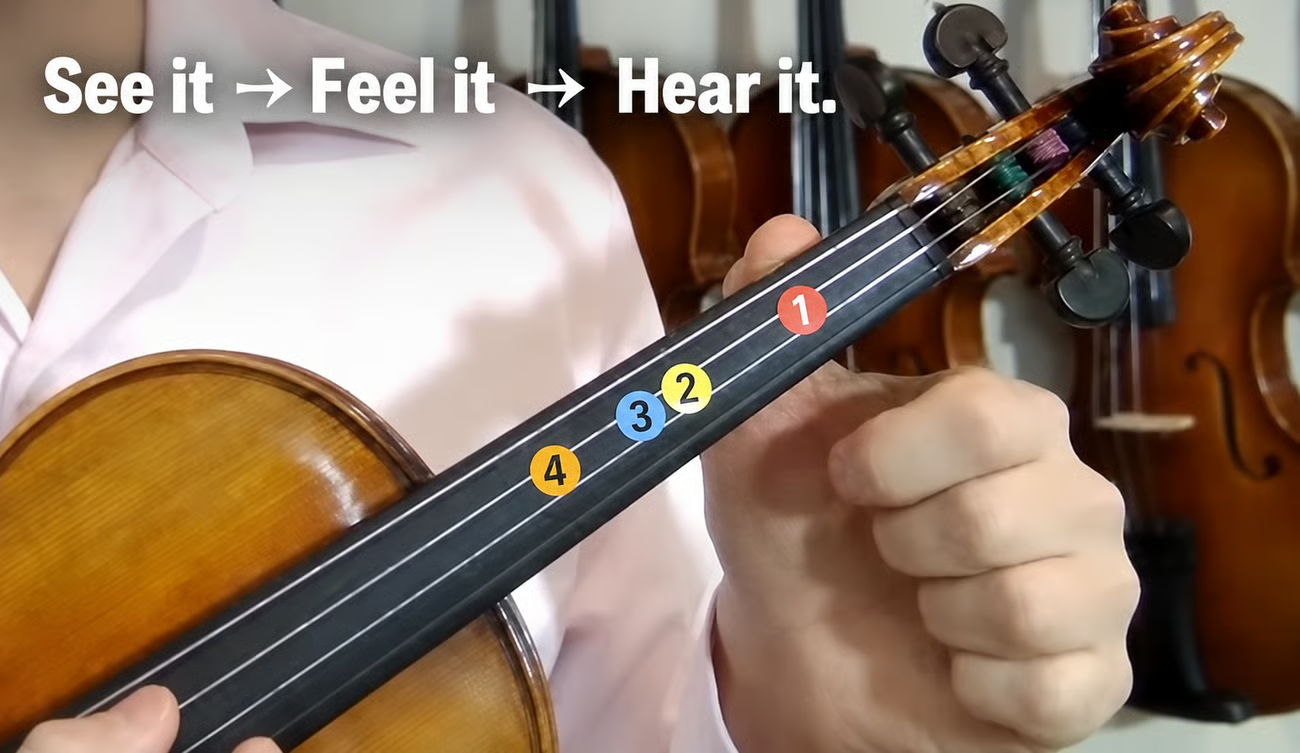
You can learn where to buy stickers and more on application in part 2 of my beginner series Violin Notes for Beginners.
Step 5: Pay Attention to Your Left-Hand Height
If there’s one thing I obsess over in the beginner left hand, it’s hand height.
This causes more problems than many beginners realize.
If your left hand sits too low, reaching your fourth finger becomes harder. Moving efficiently between the G and E strings becomes harder. Your fingers have to work against the position you’ve created.
The frustrating part is that you may not notice the problem immediately.
A brand-new beginner isn’t doing everything that exposes the weakness yet. Fourth-finger work and more difficult stretches come later.
So the low hand can feel acceptable—until your playing advances enough that it isn’t.
That’s why I care about fixing the position before the student feels the consequences.
Use Less Finger Pressure Than You Think
The second thing I watch closely is finger pressure.
Beginners often press much harder than necessary.
I want the finger contacting the string efficiently near the firmer part of the fingertip rather than flattening onto the fleshy pad. Your finger angle and overall hand position should allow you to stop the string without excessive pressure.
Why does this matter?
Speed.
You may be able to muscle your way through slow beginner music. But excessive finger pressure becomes a major limitation once you want the fingers to move quickly.
Good technique is not just about what works today.
We’re building movements that will still work when your music gets harder.
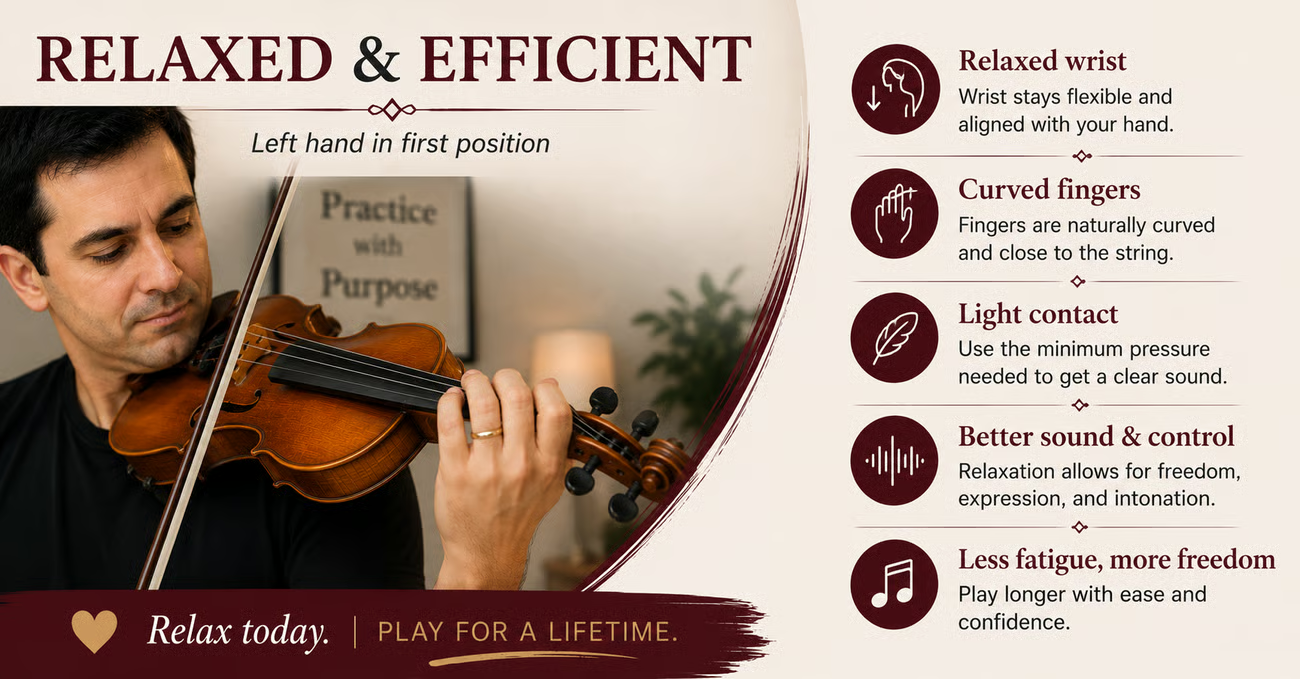
Technique should make the violin easier, not harder. A high, efficient left-hand position and light finger pressure aren't rules I teach for no reason. They give the fingers more freedom and help remove physical barriers that can eventually limit intonation, speed, and progression.
Don't Try to Juggle Four Balls on Day One
Here’s where my approach to beginner violin may feel a little different.
I don’t want you trying to master everything simultaneously.
Imagine you’ve never juggled before and someone hands you four balls.
You probably wouldn’t learn very much. You’d spend most of your energy trying to keep everything from falling.
Violin has the same coordination problem.
Your left hand needs to find notes, maintain proper height, use the correct finger angle, and avoid unnecessary pressure.
At the same time, your right hand has to learn an entirely different skill involving bow hold, tension, wrist flexibility, bow direction, and control.
Why start by juggling all of it at once?
In the next lesson of this series, we’re going to isolate the left hand and start by plucking.
That removes the enormous variable of bow coordination and allows you to concentrate on one set of movements at a time.
Once the left-hand fundamentals are established and we’ve separately developed the bow, we can bring them together.
I’ve had plenty of adult students combine the two hands within their first month when they’ve practiced each side individually.
We’re not slowing down your progress. We’re removing the things that can slow you down later.
Quality Practice Beats Mindless Practice
I’ve taught students who were eager to practice for hours because they wanted to progress as quickly as possible.
I love the enthusiasm.
But three hours of poor practice isn’t necessarily better than 30 focused minutes.
If your left hand is too low and you repeat that position for three hours, you’ve just spent three hours strengthening the habit we’re eventually going to have to correct.
The same thing happens later with bow tension.
Practice doesn’t simply reinforce good technique. Practice reinforces whatever you repeat.
That’s why I want a beginner paying attention.
Don’t only ask, How long did I practice today?
Ask:
What did I improve today?
During your next practice session, stop periodically and ask yourself: Does anything feel unnecessarily tense? Is my posture still comfortable? Has my left hand dropped? Am I pressing harder than I need to? Does the note sound in tune? Can I identify what changed when the sound became worse? The point isn't to make you obsess over every tiny detail forever. The goal is to build awareness now so correct movements eventually become natural.
Awareness Is One of the Most Important Beginner Violin Skills
When I’m standing next to a private student, I make a lot of adjustments.
Raise the hand.
Relax the thumb.
Use less pressure.
Extend the forearm.
Fix the bow hold.
Listen to that note again.
At first, a beginner simply doesn’t have enough experience to see and hear every problem. That’s completely normal.
I’ve even suggested that students practice in front of a mirror, and while that can help, you still need to know what you’re looking for.
Eventually something changes.
The student catches the problem before I mention it.
That’s one of the moments when I know they’re really progressing.
They aren’t just following instructions anymore. They’re beginning to understand their own playing.
This is also why I believe having access to a good fundamentals-focused teacher or knowledgeable violin community can make such a difference.
Feedback can help you see the things you don’t yet know how to see yourself.
You can also explore more Beginner Violin lessons in the LumenCorda Lesson Library as you continue building these skills.
What Should a Violin Beginner Be Able to Do After a Few Months?
I don’t judge beginner success by how impressive the song list looks.
I’d rather hear someone play simple music with good fundamentals than rush into difficult repertoire with technique that will eventually limit them.
Within those first few months, I want to see growing awareness.
Can you recognize tension?
Can you hear when a note isn’t quite in tune?
Do you understand why your left-hand position matters?
When something doesn’t sound right, are you beginning to diagnose what caused it?
Those skills don’t look flashy.
But they’re the skills that can turn a beginner into a lifelong violinist.
Your Next Step: Learn Your First Violin Notes
You’ve now started building the physical foundation.
You understand why fundamentals matter. You’ve learned the four strings, started tuning, looked at posture and fingerboard setup, and begun thinking about left-hand efficiency.
Next, we’re going to start making notes.
But we’re not grabbing the bow immediately.
In Part 2: Violin Notes for Beginners, I’ll show you how to find your first notes, develop better finger placement and intonation, and use plucking to isolate the left hand before adding another layer of coordination.
Find the Right Violin Path for You
Every violinist starts from a different place. Maybe you're holding the violin for the first time. Maybe you've already been teaching yourself and aren't sure whether your fundamentals are solid.
Take the free LumenCorda Violin Path Assessment and we'll help you identify the path that best matches your experience and goals.
Take the Free AssessmentFrequently Asked Questions About Violin for Beginners
Is violin hard for beginners?
Violin can be challenging because you're learning several physical skills simultaneously and the instrument doesn't have frets showing you exactly where every note belongs. But I don't believe beginners should assume they're destined to struggle. I've seen students progress extremely quickly when they establish good fundamentals from the beginning. In my experience, violin becomes dramatically harder when tension, poor hand position, excessive finger pressure, and other habits accumulate.
How long does it take a beginner to start playing violin?
You can begin learning basic violin skills immediately, but I don't like promising that someone will become a violinist in a specific number of days. I've had many adult students begin combining the left and right hands within their first month when they spent time developing each side separately. What matters more than racing toward a deadline is whether the movements you're practicing are helping you build a foundation you can continue using.
What should a beginner learn first on violin?
I start with fundamentals: understanding the instrument, tuning, posture, setup, left-hand position, finger placement, and awareness of unnecessary tension. From there, I like to isolate the left hand through plucking before asking a student to coordinate it with the bow. Think about juggling. You don't need to begin with four balls just because your eventual goal is to juggle four balls.
Should beginners use fingerboard stickers?
I like fingerboard stickers for beginners because they provide a temporary visual reference for finger placement. I've seen students use stickers for roughly three or four months and eventually develop enough awareness to remove them. The goal isn't lifelong dependence on the stickers; it's using them as one tool while the hand and ear learn where notes belong.
How much should a beginner practice violin each day?
I care more about quality and consistency than simply accumulating minutes. A shorter practice session where you're focused on hand position, relaxation, intonation, and correct movement can be much more productive than hours spent mindlessly repeating poor technique. Remember: repetition builds muscle memory whether the movement you're repeating is good or bad.
Can adults learn violin successfully?
Absolutely. In fact, I've seen adults make tremendous progress because they're often motivated to understand why they're being asked to do something and are willing to focus on fundamentals. I've worked with adult students who started at 60+ and, after a year of learning correctly, could play better than some self-taught players who had been playing for five years or more. Age wasn't the deciding factor. Fundamentals were.
Why does my left hand feel tense when playing violin?
There can be several causes, but one of the first things I look at is hand position. A hand that sits too low can force the fingers to work from an inefficient position. Excessive finger pressure, poor finger angles, and squeezing can add even more tension. Rather than simply telling yourself to "relax," look for the physical reason your hand feels like it needs to work so hard.
Do I need a violin teacher as a beginner?
You can learn a tremendous amount from good instructional material, but feedback is incredibly valuable. A beginner may not yet recognize that the hand has dropped, the thumb is pressing, a finger is landing inefficiently, or the bow is being guided with unnecessary tension. A good teacher can identify those things before they become deeply ingrained. That's also one of the reasons we're building the LumenCorda community around helping violinists get feedback and understand what to adjust.
What is the most important thing for a beginner violinist to learn?
If I had to choose one broader skill, I would say awareness. I want you to eventually recognize what you're doing correctly and what you're doing incorrectly. Once you can identify the problem, you can deliberately work on it until the correct movement becomes part of your muscle memory. That's when technique begins giving you freedom instead of feeling like a list of rules.
Michael Sanchez
Michael Sanchez is the founder of Lumen Corda, author of Fiddle For Dummies, and a violin educator with more than 25 years of teaching experience. He has helped hundreds of students develop stronger technique, greater confidence, and a deeper understanding of the violin. His teaching philosophy is simple: understanding creates better technique.
More About Michael